Pages

Saturday, January 14, 2012

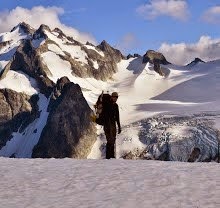
Colchuck and Dragontail Peaks

Dragontail Peak, 8840 ft.
Colchuck Peak, 8705 ft.
Stuart Range (Enchantments), Alpine Lakes Wilderness
June 21-22 2011


Climbing Photos

Due to the extremely cumbersome nature of uploading photos to Summitpost, where I post the trip reports for some of my better climbs (actually just hikes and scrambles so far), I am going to start posting photos here and then put links to this site in my trip reports. The photos are not chosen for their artistic merit but rather in give indication of the route and conditions.

Sunday, January 1, 2012

Winter Break Reading

The number of books I read over the month I was home is somewhat embarrassing. For this I would like to thank the inventor of the snowshoe, the founder of Vertical World, and the creators of How I Met Your Mother.

The Crossing - Cormac McCarthy [re-read]
The key to understanding the sequels to All The Pretty Horses is the fact that they are not sequels. Cities of the Plain was written as a screenplay long before the other two but only published later. The Crossing, as the most wandering, tangental, and philosophical of the three, makes the most sense as the last in the trilogy. It provides the backstory for the supporting character of Billy Parham in Cities of the Plain and contains some of the most poignant ruminations on religion, revolution, and civilization found in McCarthy’s writing. This book, along with Blood Meridian and The Road, occupies the rotating position of My Favorite Novel. The story of the wolf brings me to tears every time. The hermit under the transept is the best metaphor for post-enlightenment religion I have ever read. Every person who believes that something has been lost in the world should read this book.

Killing Dragons, The Conquest of the Alps - Fergus Fleming
Popular histories of mountaineering, and these are the only kind, suffer from several inherent problems. They are not written by professors of history, and they are written by popular history writers or mountaineers. Killing Dragons is of the former bent. Fleming’s composition is lucid, his wit is wry, his subject is interesting, but his skills as a historian are lacking. He does not maintain a professional tone and frequently lapses into anachronism and colloquialism. Fleming’s background is in the history of exploration, and so his most insightful analysis is the comparisons he draws between the second wave of exploration - the race for the poles, the expeditions into the African interior - and the “conquest” of the Alps. Being that this is a popular history of the story-telling vein however, he does not develop this into an argument. Overall, his research is thorough, I especially enjoyed his treatment of Conrad Gesner and the early mountaineers, and his work may be one of the best histories available, but this demonstrates more how much work remains to be done than the quality of Killing Dragons.
Admittedly, the Fleming’s book does pick up toward the second half, with the accent of the Matterhorn figuring largely, but this is due more to the value of the story itself than the skill of its writer.

The Great Days
Walter Bonatti, one of the greatest mountaineers of the mid-20th century for his many important ascents in the Alps and his part in the team that made the first ascent of K2, recounts a few of the major climbs of the second half of his career. Aside from Touching The Void, this is easily the best mountaineering book I have read: lucid, detailed, philosophical, tied to the past and looking toward the future, well-mannered but not afraid to admit and address controversy. In one particularly poignant passage, prefacing his ascent of the Whymper Spur on the north face of Grandes Jorasses, he describes his childhood experiences during the second world war and lays bare the entire existential attitude and how it leads to mountaineering.

Eiger: The Vertical Arena
This book attempts to be an anthology of short features on the the topic of the north face of the Eiger. It has an editor instead of an author. What it lacks is both any sense of scholarly rigor and cohesion. Some of the chapters are much more interesting than others but as a whole the text is dull and tiresome. The chapter on Eiger literature is especially banal. While perhaps valuable to a scholar of the Eiger as an example of how much work remains to be done, it offers neither original nor insightful analysis of mountaineering.

Sunday, December 11, 2011

Ten Things I’ve Learned This Quarter

1. People are paying attention.
[They are not necessarily the people I would want to pay attention and they are seeing what I say and do much differently that how I would wish. But they are there, and they are listening intently.]


2. It turns out that if you say nasty, inconsiderate things, sooner or later it will get you in trouble with people who actually-kind-of have the power to ruin your life.


3. I’m not sure what I’m doing with this blog anymore.
[With my attempt to wean myself off of facebook (which has failed) there has been a corresponding transfer of general commentary. I’m not sure how I feel about this. I’m sure I’m posting much less polished writing, but I’m also posting far more frequently.
Here’s the thing, social networking operates on a very basic human urge. When I see or hear or think something interesting, I want to tell it to someone. I need validation that it is actually funny or sad or fascinating or whatever it is that I’m thinking. As I am alone for most of the time this need is suppressed and is coming out in embarrassingly frequent facebook status updates.
Of course if I say, had friends, this would not be an issue. But for now this ridiculous substitute will have to suffice.]


4. My class can be really great.
[here are some of my favorite moments, to avoid being sued or expelled I have removed all names. For humorous effect, I have left them without context. So if any of these seem, in any way, disturbing or inappropriate, please assume a context that removes those connotations.
(Whether I get over this one or the bedbugs first is still up in the air)

We’re going to spend a lot more time with this malicious demon - Professor

Dysentery? I thought they only got that in war - Student

Seminar: we may not have read that part of the Phaedo…
Professor: so then let’s go on to Aristotle-
Seminar: [laughter]

Cause you are not in a kennel, you are… wherever you study - Professor

That solves everything - Student

This is Hume’s problem, Descartes doesn’t have this problem, he has other problems, Plato doesn’t have this problem, actually neither of them have problems, they’ve been dead a long time. - Professor

Absolutism can be prohibitively expensive - Professor

Professor: [Student 1] came in this morning, and was it painful?
Student 1: very.
Professor: it’s long, takes about two and a half hours.
Student 2: does it!?!

Just call be Louis - Professor

Professor: why is there a duckbilled platypus?
Student: because it’s great

And like all small, tight-knit groups of people there is a lot of fights and bickering - Student

When your mind is at its most chaotic, when you have three papers due at the same time, 500 pages to read for history, your cat has cancer, you got a parking ticket for your bicycle... what else can go wrong for a student at Seattle University... you lost your Liebnitz text running from the police at Occupy Seattle, oh and you’re drinking again too - Professor

Student 1: I’m inclined to think that the understanding is a substance
Student 2: I think it's gooey

McDowell is like Satan, he has contrived the whole thing.
- Professor

The passing of excrement was revolutionized by Chinese rhubarb, among other things like antimony. If Hooke ever ate Casu Marzu, he had many many ways of getting it out of his body. And Louis XIV had a tapeworm. That's just all you ever need to know in life.
- Student

There are many more but these are perhaps the most judicious]


5. I am actually capable of writing a essay at three in the morning. It won’t be pretty but it will get a passing grade.
[I am apparently also capable of researching and writing a ten page paper in 24 hours. I would not advise either of these things but it’s nice to know what you are capable of.]


6. Things I’ve learned from Hulu ads:
Verizon phones cause property damage and are built on stolen technology
Everyone wants pictures of your baby
Cellphone companies can control the weather
Buying car insurance is analogous to any number of mildly humorous situations
War is so much fun!
Having insurance makes bad things ok
Your child’s future happiness will be determined by which formula you feed her
Five hour energy hired a middle school drama student to make their ads
You should never be without a glowing rectangle to distract you
Someone is willing to pay for random environmental advice
Everyone aspires to be a white, upper-middle-class family of four
Hipsters drive Fiats
Cool people drink Mike’s Hard Lemonade, even cooler people drink Bud Light


7. Cormac McCarthy is an amazing man (technically a cheat, I knew this one already)
[a demonstration -

Black: That’s what sent you off the platform, it wasn’t anything personal?
White: Oh it’s personal, that’s what an education does, it makes the world personal
- Sunset Limited (film version now on youtube in 15 minute segments!)

I think by the time you're grown you're as happy as you're goin to be. You'll have good times and bad times, but in the end you'll be about as happy as you was before. Or as unhappy. I've knowed people that just never did get the hang of it.
- No Country For Old Men

See, isn’t he the greatest living writer?]


8. Arthurian Romance: shit makes so much more sense when you’ve read it.
[it was the core of chivalric literature, which was the popular reading material for almost 500 years. The modern novel owes everything to it. The tabletop adventure role-playing game, and by extension the online role-playing game, owes it even more. Smart people reference it almost as much as Shakespeare. It makes A Knight’s Tale, the film with Heath Ledger, really, really funny.]


9. Life is confusing and I don’t know what to do
[The college life is not working. I am finding it unbearably stressful and lonely. I have waited more than a year now for it to improve naturally. It does not look like I am going to adjust to the rigors of academic life. Nor does it look like I am going to develop a close group of friends. There is simply no reason for these things to happen that has not been met in the past year.
I do not need to talk with my professors. I don’t need to take a break or change my major. All of the standard solutions are ineffective. If there was an immediately apparent course of action I would have found it.
This is not end-of-the-quarter stress speaking, my finals are over. This is just me honestly attempting to evaluate whether I want to put myself through another two quarters (or two years) of life at SU.
Conversely, education is my only way forward. I know what I want to do with my life but I don’t know of any other way to get there than to finish my degree and then get several more. I am failing at college pretty spectacularly but I know of no other way to get to the only future I can actually imagine enjoying.]


10. This one is going to be another cheat because I knew it before, but this quarter has really driven it home: It is impossible to know how things will turn out.
[the startlingly unexpected occurs on a regular basis, in the words of the author of A Fish Out Of Water, “something may happen and you never know what”]

Thursday, December 8, 2011

A Definition of Hypocrisy

inspired by xkcd.com/987/

“Never be satisfied with anything less than your true potential”
[the list of possible true potentials can be found on page 14 of the student handbook]

“Live each day like it could be your last”
[the wisdom of this one actually depends entirely on the extent of your imagination]

"Don't be afraid to rock the boat"
[note: all that's really changed is that we've built a boat impervious to ideology, get close enough to it with anything else and you'll see how nasty we are when we're seasick.]

"Be who you are and say what you feel, because those who mind don't matter and those who matter don't mind."
[be aware, if they actually mind enough they begin to matter in rather unpleasant ways]

"Our diversity makes us strong, every perspective is valuable"
[see officer, I was just trying to get them to understand that their mantra of "diversity" is just a different idea of how people should conform, I was never actually going to...]

“You can tell me anything”
[that’s really weird. Seriously, like, ew. I meant we could commiserate about not meeting our families’ expectations or something]

Tuesday, December 6, 2011

Convulsions of a Forgetful Pianist

In high school I took a rather odd course called Theory of Knowledge; it was one part deconstructionist philosophy, one part introductory logic and rhetoric, and one part college application prep. We mostly read about ways of knowing, did critical thinking drills, and learned how to write reasoned arguments. It was the best class I had ever taken.
On of the first subjects we attacked, and I use that word with every connotation of its meaning - by the time we moved on from a subject I invariably felt that I knew less about it than when we started, was memory. One class we watched a short film about a great pianist whose name I have unfortunately forgotten. In an accident of some kind, the specifics of which I also cannot recall, he had lost his long-term memory. As soon as he looked away from someone and then looked back it was as if he had never met them. That is unless he had an emotional attachment to the person before the accident - he acted very loving toward his wife. The mind apparently stores emotional connections differently than linear memory.
Another thing he had not lost was his musical skills. He could not practice an instrument or compose music, as he could not concentrate on anything for more than, at the very longest, a couple minutes minutes. But he could sight-read beautifully. His wife would set him in front of a piano and as long as she kept the pages of the sheet music turning he would keep playing - he was truly a gifted musician. She did this rarely though, because of what would happen when he would stop. When the song would end or she would stop turning the pages he would go into convulsions. His doctors said that what was happening was that his brain desperately needed continuity (he would keep journals, pages and pages of mostly identical paragraphs describing how he felt like he had just woken up and was confused as to what was going on) and that in the task of sight-reading he had found it, and the forcible shock from that security back into a memory-examining state, for which there was no memory to examine, was a violent transition. What happens when you sight-read, and I played the cello for eight years so I can say this with some idea of what I am talking about, is that you are completely absorbed by the task, you don’t think about the past or the future or anything but the note you are playing at that moment and perhaps the note you will play next.
I recount this story not because of any psychological insight I can offer into that poor man’s condition, but because his sight-reading offers an possibly insightful way of looking at my own behavior. Non-being does not really frighten me - I cannot conceive of not existing; it is infinity that I live in fear of. Descartes claimed that the existence of the idea of infinity in our minds cannot be attributed to anything other than an innate idea planted by God. I disagree. Consciousness is, as far as any individual can tell, infinite. I know on some level that I could cease to exist, but I cannot really imagine it, and so I perceive myself as an infinite being. And this is my dread: all of existence stretched out before and behind me, all of it a dim blur. Most of the time this fearfulness is on the periphery, little flashes of it may emerge from time to time but for the most part I am able to suppress it. But sometimes when I am absorbed in a project, usually a literary one, I let down my guard. I throw myself into the intellectual game of composition, argumentation, crafting words into landscapes and sculptures and songs. And I forget where I am. In those moments I could be anywhere on earth - there is only my mind and my tongue and the words I am writing. But then it ends and all the horror of the infinite comes rushing down upon me. Everything that cannot be changed and everything I may become and everything I may pass by forever. Like that forgetful pianist I find temporary shelter in the act of creation but when it is done I am more aware of the horror than I was before. Yet still I begin to write. I sit down with the intension of losing myself knowing, on some level, that I will have to end. It is the behavior of any drug addict, any alcoholic, any escapist.
Tolkien wrote about escapism. He said that the man in prison should not be faulted for trying to escape or, if this is impossible, trying to think of things besides bars and locks. On some level it is foolish to escape into a fantasy you know will end in pain, but only if you do so without thought to that pain. The pain must be understood and accepted - it must be an accepted consequence.

Wednesday, November 30, 2011

Envisioning Life

I’ve been thinking, of late, of some other ways to envision my life.

Life as Nightmare
I am increasingly, of late, gripped by the suspicion that my life is a dream. Each time it seems to be nearing some normality it shifts in increasingly bizarre and unpleasant ways. It no longer seems as comprehensible as reality is supposed to be. I can no longer see the form of truth behind it. At any moment I expect to wake up, sometimes it is a happy prospect, sometimes fearful.

Life as Demonic Assault
I have had the feeling, of late, of a presence following me. When I am alone I see it at the corners of my vision and around the edges of things. When I am still it whispers into my ear all of my most hated memories, of which I suspect this day will become one. Surely there must be some malicious strength wrecking all of my intensions, for as soon as I grasp strongly some goodness, misfortune and despair come crashing down around me, the greater the goodness the worse the wreckage. The demon wants nothing more than for me to be afraid and alone and totally hopeless, and it knows well how to twist these thoughts within me.

Life as Equilibrium
Cormac McCarthy wrote in No Country For Old Men that “by the time you're grown you're as happy as you're [going] to be. You'll have good times and bad times, but in the end you'll be about as happy as you was before. Or as unhappy. I've [known] people that just never did get the hang of it.”
I am not really any more or less happy than I was two years ago and I see little reason for that to change. Except for one thing, and I don’t really know what to make of it. There are possibilities on the horizon in ways I had not thought I would ever see. Perhaps a time is coming that will bring my adolescence into balance, so that my life is not an equilibrium of constant mediocrity but blackest despair and wild joy in equal parts.

This shit is like a car accident, you just keep replaying it over and over in your head like there is something you will see that you missed all the other times.
I was not drunk. And I was not on a motorcycle. But I’m not sure I could have fucked things up any more supremely if I was.